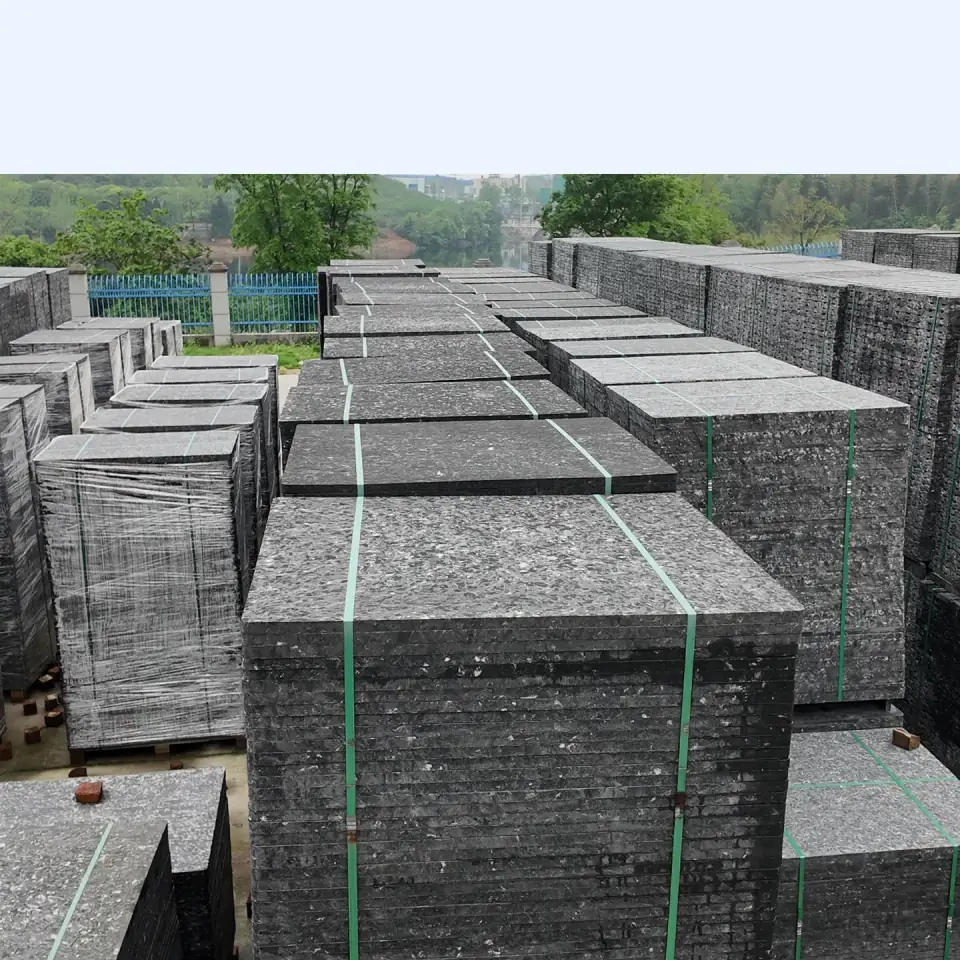
Key takeaways
- GMT glass-fibre pallets offer the best balance of weight, durability and vibration for most plants.
- PVC is cheapest up front but can deform under heavy vibration or heat.
- Steel lasts longest and suits steam curing, but is heavy and must be kept rust-free.
- Wood (larch) damps vibration well but needs dry curing to last.
A block plant may own more than a thousand pallets, and every block you sell sits on one through moulding and curing. Pallet choice affects block density, surface flatness, handling labour and — over five to ten years — your real cost per block.
Side-by-side comparison
| Property | GMT | PVC | Steel | Wood (larch) |
|---|---|---|---|---|
| Typical life | 8–12 years | 3–5 years | 15+ years | 5–8 years |
| Weight | Light | Light | Heavy | Medium |
| Flatness | ≤ 1.0 mm | Can creep with heat | ≤ 0.4 mm | ≤ 1.0 mm |
| Steam curing | Good | Poor | Excellent | Fair |
| Vibration transfer | Excellent | Good | Excellent | Good (damped) |
| Up-front cost | Medium | Low | High | Medium |
GMT (glass-fibre mat thermoplastic)
GMT pallets are made from continuous glass-fibre mat in a polypropylene matrix and pressed into boards. They are light enough to handle by hand, completely waterproof and stiff enough for automatic lines. For pallet feeders that knock the edges, choose a steel C-profile edged version.
PVC
PVC pallets are the low-cost option for semi-automatic machines. They are smooth and light, but can bend over time in hot climates or under strong vibration. They are a sensible choice when cash is tight in the first year.
Steel
Manganese steel pallets deliver the best flatness and the longest life, and tolerate steam curing. Their weight requires mechanised handling, and they need anti-rust treatment.
Wood
Larch wood pallets with steel edge bands give good vibration damping and are pleasant to handle. They last longest with natural (non-steam) curing.
How to calculate cost per block
Divide pallet price by (cycles per day × working days per year × years of life). A pallet that costs twice as much but lasts three times longer is cheaper per block. Ask us for a pallet quote with your machine model and pallet size, and we will calculate the cost per block for each material.
Frequently asked questions
How many pallets does a block machine need?
Roughly the number of cycles in one day plus 10–20% spare, because pallets stay under blocks during the first 24 hours of curing. A QT4 semi-automatic plant typically needs 600–1,000.
Which pallet is best for steam curing?
Steel pallets are best, followed by GMT. Avoid PVC for steam curing.